


Hey everyone, Aaron here. If you’ve been following the AI world even a little lately, you’ve probably noticed how much everyone relies on NVIDIA’s powerful GPUs. They’re basically the gold standard for training and running big AI models—ChatGPT-style stuff, image generators, you name it. But that kind of dominance comes with a price tag (literally), supply shortages, and a bit of a monopoly vibe that isn’t always great for innovation or costs.
That’s why I got really excited when Meta dropped their latest update on March 11, 2026. They’re rolling out not one, not two, but four new generations of their in-house AI chips under the MTIA family: the MTIA 300, 400, 450, and 500. This isn’t just tech talk—it’s Meta taking real steps to rely less on NVIDIA for huge chunks of their AI work, especially the day-to-day stuff billions of us use on Facebook, Instagram, and WhatsApp.
As someone who loves seeing positive shifts in tech that make things more accessible and sustainable, I think this is worth unpacking. Let’s walk through what’s happening, why it matters, and the brighter side of it all.
Why Everyone’s Been So Hooked on NVIDIA (and Why That’s Starting to Change)
NVIDIA’s chips are incredible—no denying that. Their H100s, Blackwells, and upcoming ones power most of the major AI breakthroughs we see. Meta itself just signed massive deals with NVIDIA (and even AMD) to grab millions of those GPUs for their data centers. They’re not ditching NVIDIA overnight; they still need those heavy-duty beasts for training the biggest models like Llama.
But here’s the flip side: those GPUs are super expensive, hard to get in the quantities needed, and tied to NVIDIA’s own software world (CUDA). When demand explodes like it has, prices shoot up, waits get long, and everyone feels the pinch.
Meta’s answer? Build their own specialized chips tailored exactly to what they do most—things like ranking what shows up in your feed, recommending Reels, and now running generative AI features (think creating images or smarter replies). These custom chips, called MTIA (Meta Training and Inference Accelerator), are designed in partnership with Broadcom, made at TSMC, and built on open standards like RISC-V. That means more flexibility, lower long-term costs, and less vulnerability if one supplier has issues.
It’s the same smart play Google’s been doing with TPUs, Amazon with Trainium/Inferentia, and Microsoft with Maia. When big players diversify like this, it creates healthier competition overall. Prices stabilize, innovation speeds up, and eventually, we all benefit from more efficient AI that doesn’t burn through insane amounts of cash or energy.
The MTIA Family: Four Chips, Super-Fast Timeline, Big Improvements
What really stands out is how quickly Meta is moving. They’re planning to drop a new MTIA generation roughly every six months—way faster than the usual two-year chip cycles most companies follow. That speed comes from a clever modular “chiplet” design: reuse parts for compute, memory, and networking, then tweak as AI models change.
Here’s the lineup:
- MTIA 300 — Already up and running in production. It handles ranking and recommendation (R&R) tasks and now even some training for those systems. Solid, cost-effective foundation.
- MTIA 400 — Testing wrapped up, heading to data centers soon. This one’s a big step up: way more compute power in low-precision formats (like FP8), higher memory bandwidth, and racks that pack 72 chips together with efficient cooling. Meta says it matches top commercial chips on raw speed while saving real money. Great for mixing recommendations with generative AI.

Meta rolls out in-house AI chips weeks after massive Nvidia, AMD deals
72 MTIA 400 chips packed into one massive scale-up rack—Meta’s way of handling huge AI workloads efficiently.
- MTIA 450 (early 2027) — Doubles the high-bandwidth memory (HBM) speed again, adds special hardware for tricky parts of modern AI models (like attention in mixture-of-experts setups), and supports even lower-precision math without losing quality.
- MTIA 500 (later 2027) — The current top of the line: another big jump in memory bandwidth (50% more than 450) and capacity (up to 80% more), plus serious compute boosts. Overall, from 300 to 500, memory bandwidth goes up 4.5x and raw compute performance 25x in under two years.
All these chips share the same racks and networking setup, so upgrades are smooth. They’re built around PyTorch, so Meta’s engineers can move models between GPUs and MTIA without massive rewrites. Practical and forward-thinking.
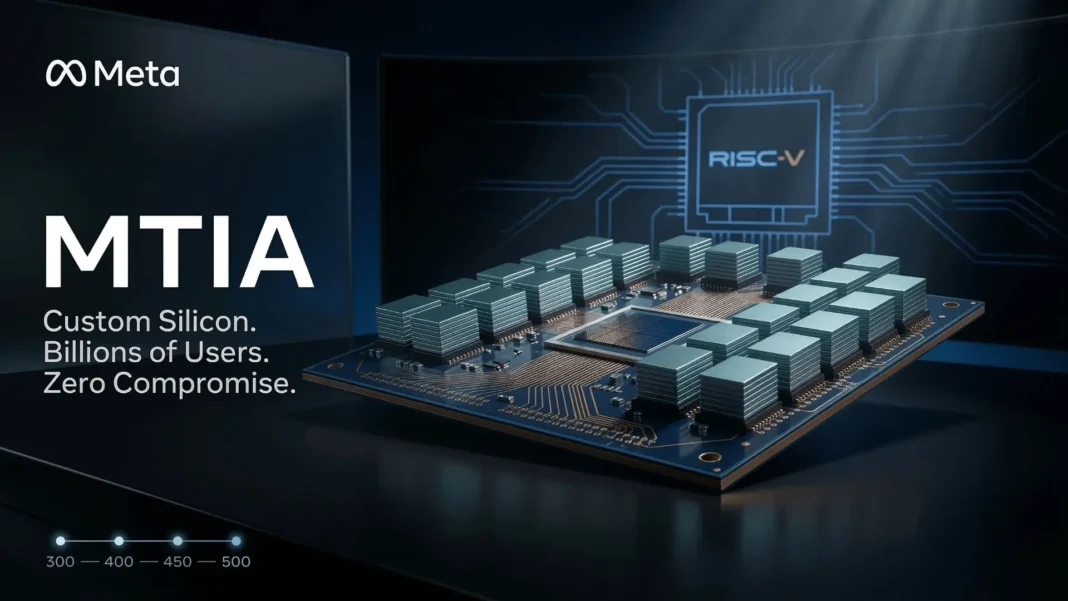
Meta’s 4-Gen MTIA Chip Roadmap: Powering AI for Billions of Users
Meta’s MTIA roadmap visualized—custom silicon scaling fast to serve billions.
How This Actually Reduces Over-Reliance on NVIDIA
Meta’s being upfront: these chips won’t replace their NVIDIA (or AMD) purchases for training giant frontier models. That still needs the big guns. But for inference—the part where AI actually responds to you, generates content, or picks what you see next—custom chips like MTIA are way more efficient and cheaper per job.
By shifting more of that everyday workload in-house, Meta lowers their exposure to NVIDIA’s pricing power and supply crunches. They escape full lock-in to one ecosystem and gain more control. Over time, that saves billions, which can go toward better features, keeping things free for users, or investing in cooler positive AI uses (mental health tools, education aids, creative helpers).
It’s part of a bigger trend. Every major cloud and tech player is building their own silicon now. More options mean less chance of any single company controlling the whole AI hardware game.
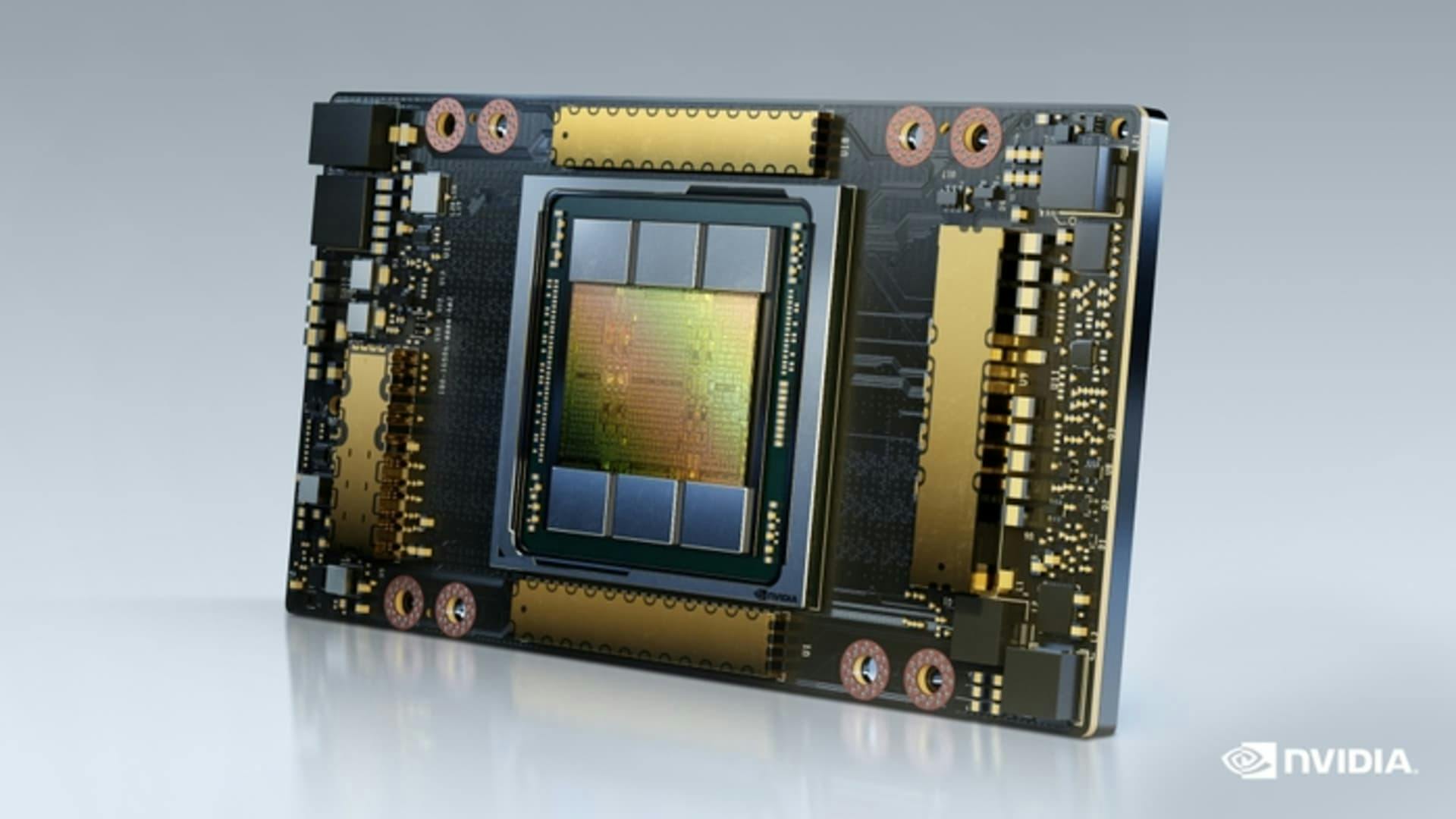
All You Need to Know About Meta’s New AI Chip MTIA
Close-up look at custom AI accelerator hardware—Meta’s MTIA chips are built for specific, high-volume tasks.
The Really Positive Side for Everyday People and the Planet
This isn’t just corporate chess. From where I sit, here’s why it feels uplifting:
- Cheaper, better AI features — Lower running costs let Meta add smarter recommendations, faster generators, and more helpful tools without jacking up prices or paywalling everything.
- Quicker updates — Six-month chip cycles mean they can adapt to new AI ideas super fast, bringing improvements to our apps sooner.
- Greener footprint — Specialized chips sip less power than general-purpose GPUs for the same jobs. In a world pushing for sustainability, that’s huge.
- Opens doors wider — When hyperscalers prove custom silicon works at this scale, it inspires smaller teams and startups to innovate without being stuck behind expensive hardware walls.
Your Reels get more spot-on, chats feel more natural, image tools improve—all while the system behind it becomes more resilient and efficient.
Of course, challenges exist. Designing chips is tough and pricey. Memory shortages (like HBM) hit everyone. Training the biggest models still leans on NVIDIA. But Meta’s mixing vendors smartly and moving with real velocity.
By late 2027, the full MTIA 300–500 lineup should be humming in their data centers, powering smoother, more affordable AI across platforms. It’s exciting to think this could help push toward truly accessible “personal superintelligence” for billions.
What do you think? Does seeing big companies like Meta build their own chips make you more optimistic about AI’s future—or worried about fragmentation? Drop a comment below. I read them all and love hearing your take.