Digital Shield: How Smart Sensors and AI are Revolutionizing Wildlife Conservation
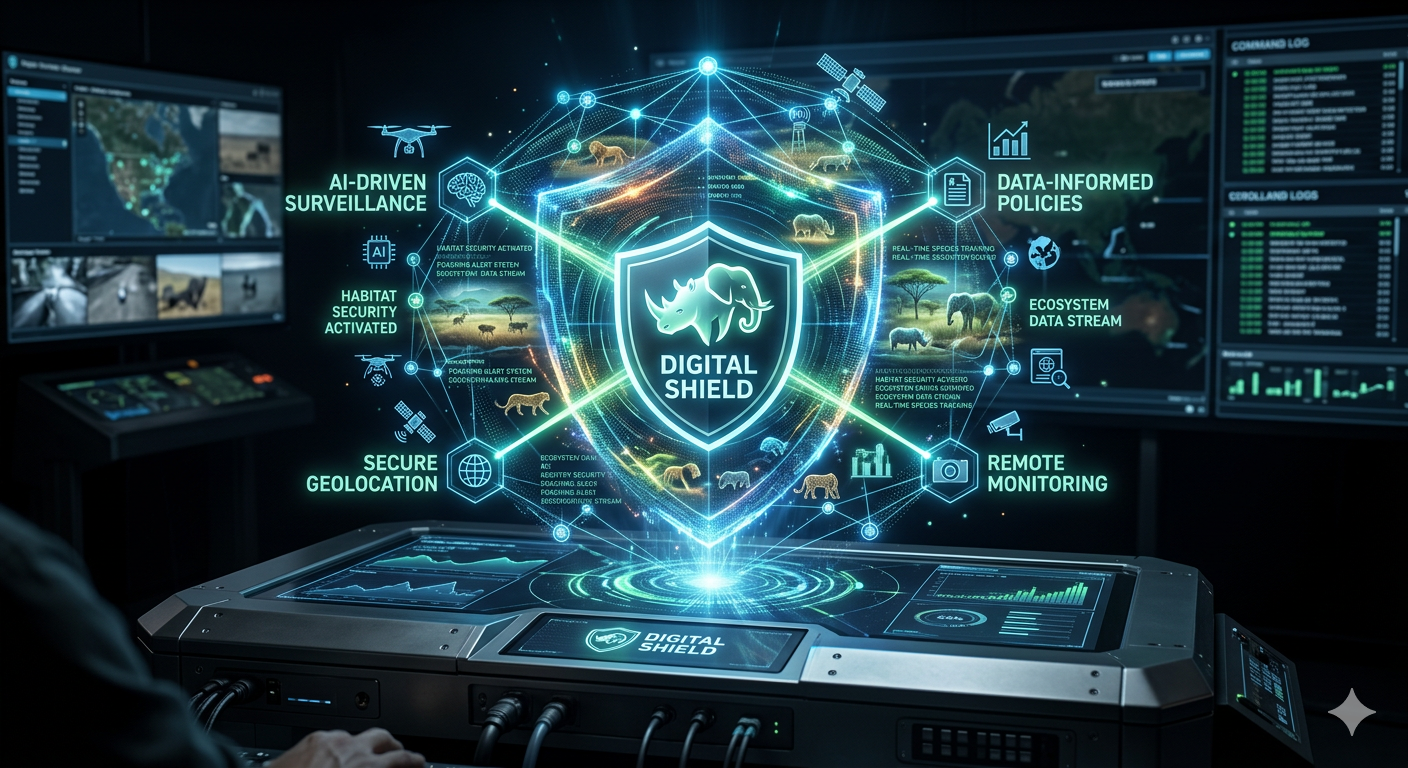
In the heart of the African savanna, under a vast, star-studded sky, a silent revolution is taking place. It isn’t led by boots on the ground alone, but by a sophisticated web of “digital guardians.” As shown in our featured image, the modern frontline of conservation is a high-tech ecosystem where satellites, drones, and AI-powered sensors work in perfect harmony to protect the majestic creatures that call this wilderness home.
For decades, wildlife protection was a game of cat and mouse played across millions of acres of impossible terrain. Rangers were often outnumbered and outgunned by poaching syndicates. But today, The Positive Angle explores how we are finally evening the odds. Technology isn’t just an accessory to conservation; it is becoming the very lifeblood of survival for endangered species like elephants, rhinos, and giraffes.
1. The Internet of Wild Things (IoWT)
The concept of the “Internet of Things” (IoT) is familiar in our smart homes, but in the wild, it takes on a life-saving dimension. Smart sensors are no longer just passive trackers; they are active intelligence units.
Acoustic Threat Detection
One of the most vital components shown in our monitoring array is Acoustic Threat Detection. These sensors are tuned to the specific frequency of a gunshot, a chainsaw, or even the engine of an unauthorized vehicle.
- The AI Edge: Traditional microphones would be overwhelmed by the noise of wind and animals. Modern AI filters out the “chatter” of the bush to identify a poacher’s footstep from miles away.
- Real-time Response: When a threat is detected, the sensor doesn’t just record it—it sends an instant encrypted alert to a central command hub, allowing rangers to intercept poachers before they reach their target.
Thermal & Visual Intelligence
As seen in our “Thermal Sensor” display, heat-seeking technology allows conservationists to see through the darkness. Poachers often operate under the cover of night, but they cannot hide their heat signature. AI models trained on millions of images can now distinguish between a wandering buffalo and a human crouching in the grass with a rifle.
2. Eyes in the Sky: Drones and Satellites
The “Integrated Wildlife Guardian Array” relies heavily on aerial perspective.
Autonomous Drones (UAVs)
The drones seen flying in formation in our image are the “cavalry” of the digital shield. Unlike traditional planes, these drones are silent and can be deployed in minutes.
- Swarm Technology: By communicating with each other, a swarm of drones can map a massive river basin—like the one pictured—detecting traps or tracking a herd of elephants moving toward a high-risk boundary.
- Direct Interaction: Some advanced drones are now equipped with speakers to play predator sounds or high-pitched frequencies to safely turn a herd away from a dangerous area.
Satellite Connectivity
The purple beams in our visual represent the bridge to the stars. In remote areas where there is no cell service, satellites provide the “Remote Link” for the Quantum Neural Engine. This ensures that even in the deepest corners of the jungle, a sensor’s alert reaches the world in milliseconds.
3. Predictable Protection: The Role of Big Data
Perhaps the most “Positive Angle” of this technology is its ability to move from reactive to proactive.
By analyzing years of “Integrated Pattern Analysis” (as seen on the monitors), AI can predict where poachers are likely to strike next.
- Correlating Data: The system looks at moon phases, weather patterns, and historical migration routes.
- Probability Mapping: It generates “heat maps” of risk. If it’s a full moon and the water levels are low, the AI might suggest doubling patrols at a specific river crossing.
- Dynamic Routing: Rangers are no longer wandering aimlessly; they are guided by data-driven “smart patrols.”
4. Environmental Health Monitoring
Conservation isn’t just about stopping poachers; it’s about maintaining the habitat. Our “Environmental Health” widget tracks air quality, water levels, and vegetation health.
- Climate Resilience: Sensors can detect the early signs of drought or a sudden drop in water quality that could lead to a mass die-off.
- Biodiversity Tracking: By monitoring the “Air Quality Index” and soil moisture, scientists can ensure the savanna remains a viable home for the next generation of wildlife.
5. The Human-Tech Partnership
It is crucial to remember that technology does not replace the human ranger; it empowers them. A ranger with a tablet—like the central console in our image—is worth ten rangers without one.
When a ranger knows exactly where a rhino is, what its heart rate is, and that a suspicious vehicle is 5 kilometers away, they can act with surgical precision. This reduces the physical risk to the brave men and women on the front lines and ensures that limited resources are used where they matter most.
The Path Forward
As we look at the river winding through the trees in our visual, we see a vision of the future. A future where technology isn’t a threat to nature, but its most devoted protector. From Quantum Neural Engines to Smart Footwear for rangers, every bit of innovation brings us closer to a world where we no longer have to fear for the extinction of our most iconic species.
At The Positive Angle, we believe that when human ingenuity meets the beauty of the natural world, the possibilities are infinite. The digital shield is active, the sensors are guarding, and for the first time in a long time, the future of the wild looks bright.
Disclosure: Some of the links on thepositiveangle.com are affiliate links. This means that, at no additional cost to you, I may earn a small commission if you click through and make a purchase. This helps support the site and allows me to continue bringing you high-tech adventure and conservation content. Thank you for your support!