
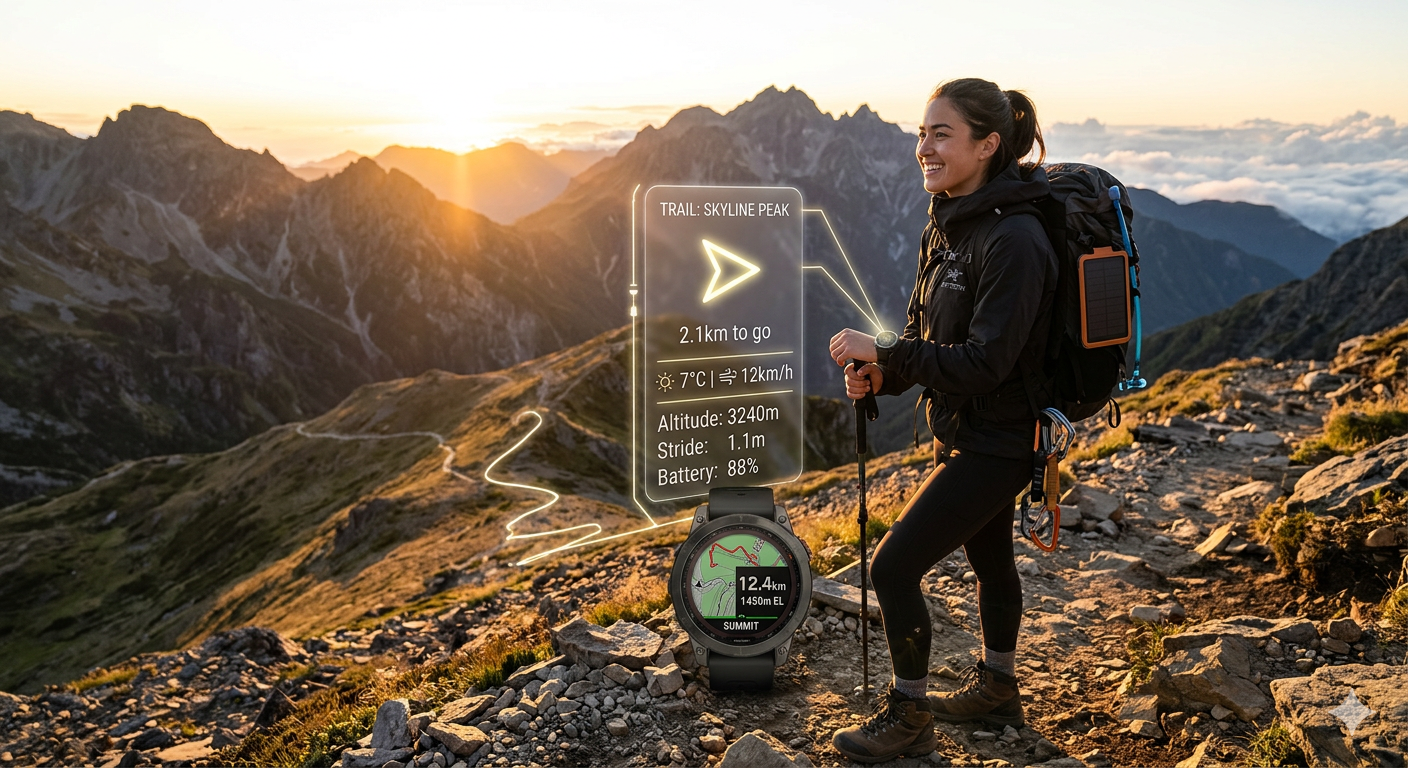

How AI-Powered Health Wearables Are Changing the Way We Live
And why the WHOOP 5.0/MG is the device leading that revolution.
Imagine waking up every morning and, before you even pour your first cup of coffee, knowing exactly how recovered your body is, what your heart was doing while you slept, and whether your biological age is trending younger or older than your birth certificate says. This isn’t science fiction — it’s the promise of today’s AI-powered health wearables, and it’s already here.
From elite athletes to everyday health-conscious individuals, wearable technology has undergone a dramatic evolution. The humble step counter has given way to sophisticated biometric platforms that track everything from heart rhythm anomalies to blood pressure trends — all powered by artificial intelligence that learns your unique physiology over time. In this article, we explore the rise of AI health wearables, what makes them genuinely transformative, and why the WHOOP 5.0/MG Activity Tracker stands out as the most compelling device on the market today.
The AI Health Wearable Revolution
Health wearables have been around for decades, but the integration of artificial intelligence has fundamentally changed what they can do. Early devices counted steps. Modern AI-powered trackers interpret patterns across thousands of data points to deliver actionable, personalized health guidance that was once only available through expensive lab testing or clinical visits.
What makes AI the game-changer? Three things:
Continuous learning: AI models baseline your unique biology and detect deviations that generic thresholds would miss.
Pattern recognition: Machine learning identifies correlations between behaviors (alcohol, late meals, stress) and downstream health outcomes like sleep quality and recovery.
Predictive insights: Rather than just telling you what happened, AI wearables tell you what is likely to happen — and how to intervene.
Global spending on health wearables continues to surge, and AI is the primary driver of premium-tier adoption. Consumers are no longer satisfied with raw data dumps — they want meaning, context, and coaching. The devices that deliver this most effectively are commanding the market.
Beyond Fitness: Wearables as Preventive Medicine
The most significant shift in AI wearables is the move from fitness tracking to genuine health monitoring. This distinction matters enormously. Fitness trackers help you hit performance goals. Health monitors help you avoid the emergency room.
Conditions like atrial fibrillation (AFib) — a heart rhythm disorder that significantly increases stroke risk — can go undetected for years during routine annual checkups. Wearable ECG technology can passively screen for irregular heart rhythms around the clock. Blood pressure trends monitored over weeks provide far richer cardiovascular data than a single reading at a clinic. Sleep stage analysis, heart rate variability tracking, and VO2 Max measurements give clinicians and patients alike a window into systemic health that was previously impossible to access outside a hospital setting.
This is the frontier where the best AI wearables now operate — and the WHOOP 5.0/MG was built squarely for it.
⭐ EDITOR’S TOP PICK: WHOOP 5.0/MG Activity Tracker
The most comprehensive AI-powered health wearable available in 2025 — combining medical-grade ECG, blood pressure insights, longevity tracking, and elite recovery coaching in a single screenless device.
WHOOP 5.0/MG: A Deep Dive
When WHOOP launched the 5.0 and its premium sibling, the MG (Medical Grade), in May 2025, it represented the most ambitious update in the company’s history. This wasn’t merely a hardware refresh — it was a repositioning of the entire brand from fitness tracker to personal health platform.
Hardware That Gets Out of Your Way
The WHOOP 5.0 and MG are 7% smaller than their predecessors, yet pack dramatically more capability. There’s no screen — a deliberate design choice that prioritizes battery life, 24/7 wearability, and keeping your focus on your day rather than a notification feed. Enhanced sensors sample physiological data 26 times per second, while a redesigned processor delivers 10x greater power efficiency. The result is an industry-leading 14-day battery life — or up to a full month when paired with the new Wireless PowerPack.
Healthspan & WHOOP Age: Your Biological Clock, Measured
Perhaps the most forward-thinking feature of this generation is Healthspan with WHOOP Age. Developed in partnership with Dr. Eric Verdin, CEO of the Buck Institute for Research on Aging, this feature uses nine different biomarkers — including VO2 Max, heart rate variability, sleep efficiency, and more — to calculate your physiological age and your “Pace of Aging.” You may be 42 years old chronologically, but WHOOP can tell you whether your body is performing more like a 35-year-old or a 50-year-old — and crucially.
https://amzn.to/4lFMCjcThanks for reading! Just a quick heads-up: to keep thepositiveangle.com running and free for everyone, some of the links in this article are affiliate links. If you make a purchase through them, I may earn a small commission at no extra cost to you. I only recommend tech and gear that I truly believe in. Your support means the world!